
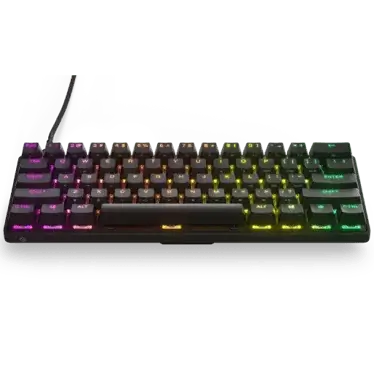
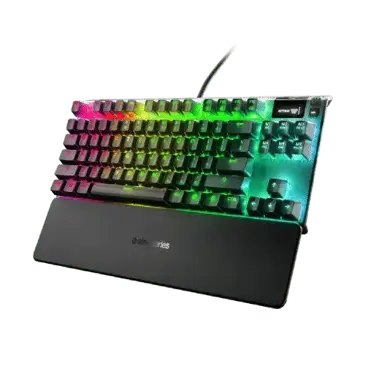
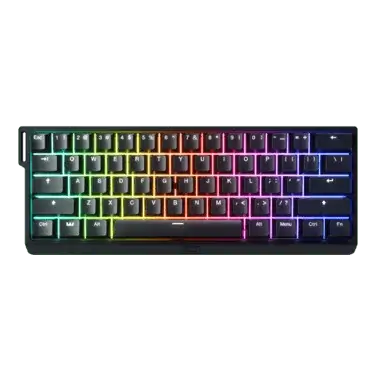
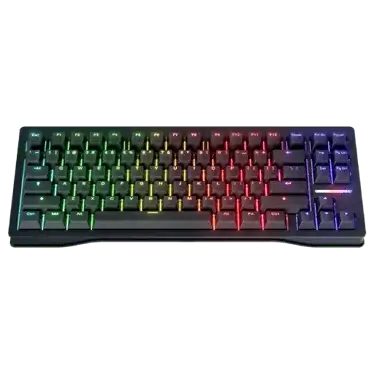
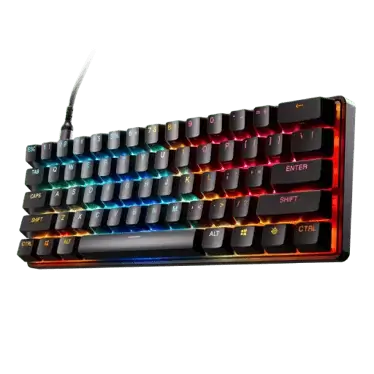
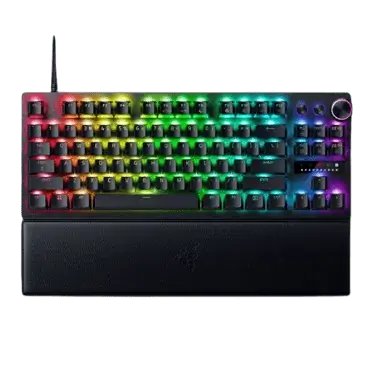
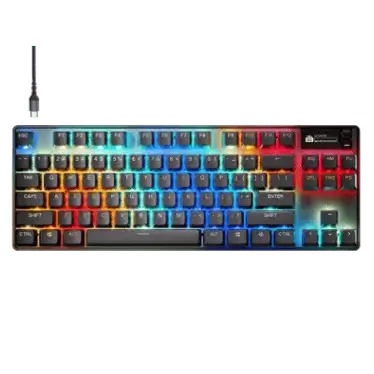
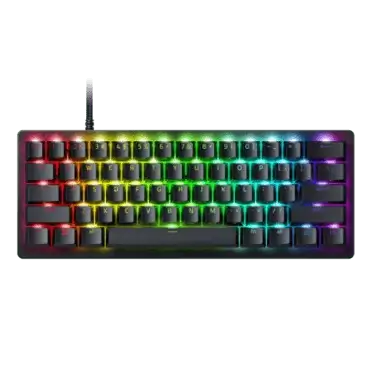
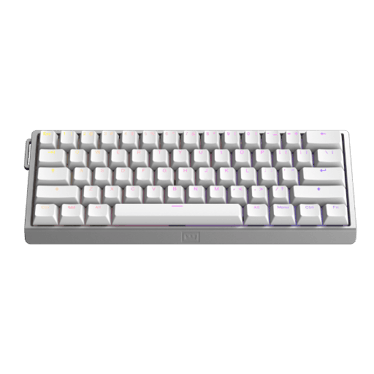
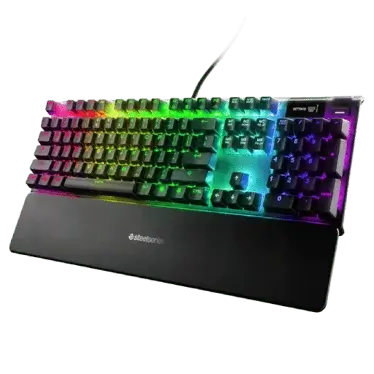
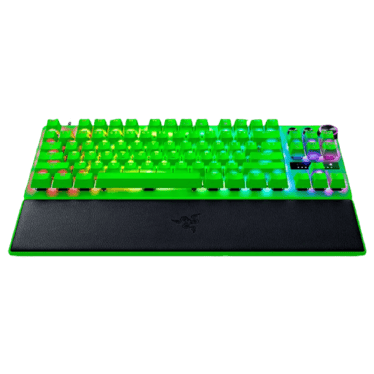
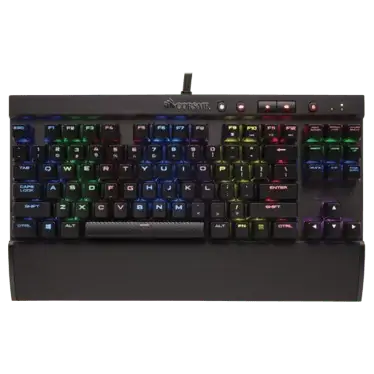
What the top keyboards have in common
Fortnite is the most keyboard-sensitive top shooter — build and edit speed live and die by your switch. Look across 12 keyboards and a few patterns are obvious:
- Hall-effect / magnetic switches dominate. Fortnite is where Wooting, Razer Huntsman V3 Pro, and similar boards earn their pro adoption. Rapid trigger (re-actuates the moment you lift the key) is a measurable advantage in edit chains where every millisecond between key release and re-press is one millisecond of slower build. This is why the top of this list looks very different from CS2 or Valorant.
- 60% / 65% form factors are common. Smaller than TKL — there's no realistic need for function keys mid-game, and the saved desk space matters more in Fortnite where wide pad motion is frequent.
- Linear switches still rule. Even on Hall-effect boards, the chosen switch profile is overwhelmingly linear (smooth, no bump). Tactile bumps slow down rapid taps.
- SteelSeries leads the brand share at 50%. The Fortnite keyboard market is more concentrated than CS2's — fewer brands serious about competitive features, fewer brands at the top.
Why keyboard matters more in Fortnite than in any other shooter
In CS2 and Valorant, the keyboard handles movement and a few utility binds. In Fortnite, the keyboard is firing build piece presses, edit confirms, weapon swaps, and resets at a rate of several per second during a fight. A keyboard that mis-registers or has high actuation latency directly costs you build trades — there's no other gear category where the input device's response curve matters as much.
That's why the top of this list is dominated by Hall-effect boards with rapid trigger. The advantage is small per keystroke and massive cumulatively over a 30-minute build battle.
How this list is built
Every card on this page is rebuilt from the JSON setup data on each player's profile in our database. When we re-scrape a player and their keyboard changes, the ranking shifts automatically on the next build — there's no editor reordering anything. Color and switch-variant suffixes are collapsed where possible. The list reflects usage as of June 2026.
Frequently asked questions
What's a Hall-effect keyboard and why does Fortnite care?
Hall-effect (magnetic) switches measure key position with a magnetic sensor instead of a metal contact. That lets boards offer adjustable actuation (set how far you press before the key registers) and rapid trigger (re-actuate on the way back up). For Fortnite, rapid trigger is the killer feature — it shortens the dead time between releasing a build key and pressing the next one, which compounds over an edit chain.
TKL or 60% — what do Fortnite pros use?
The shift is toward smaller form factors. 60% and 65% boards are more common in Fortnite than in CS2 or Valorant. Less desk crowding, no realistic need for the function row mid-game.
Are Hall-effect keyboards "cheating"?
No — they're legal in every tournament. Their advantage is faster key re-actuation, which is hardware-level and similar to how mouse polling rates have improved. The skill ceiling is the same; the floor for top-end execution is just lower.
Does the switch type really change my build speed?
Slightly. The bigger wins are training your fingers and using the right binds — a Hall-effect board on bad mechanics won't beat solid mechanics on a Cherry Red. But at the top level where mechanics are equal, the keyboard is a real edge.
Why isn't my keyboard in the list?
If it's not in the top 12, fewer than 2 Fortnite pros in our database use it. The competitive keyboard market is consolidating around Hall-effect — older mechanical boards still work fine but rarely break the pro top 12.
How often is this list updated?
Whenever we re-scrape our player database — typically every few weeks. The ranking auto-regenerates from the latest data. You're looking at usage as of June 2026.